Owning a home along a river in Simcoe is a dream, but banks, docks and shorelines come with rules that can surprise even seasoned owners. You want to maintain your property, protect the shoreline and avoid fines or delays. This guide gives you the basics on permits, self-screening with maps and practical steps to keep projects moving. Let’s dive in.
Who regulates river work in Simcoe
In Norfolk County, the Long Point Region Conservation Authority reviews and permits many projects near rivers, streams, wetlands and hazard lands. Even if a municipal permit is issued, you may still need a separate approval from the CA. A CA permit also does not replace any municipal, provincial or federal approvals you might need.
Federal and provincial rules can apply to in-water or shoreline work. Works that could harm fish or their habitat may require review by Fisheries and Oceans Canada, and projects that affect navigation may need Transport Canada authorization. For local land-use or building matters, you should also check with Norfolk County.
- Learn more about the local CA at the Long Point Region Conservation Authority.
- See the broader framework in Conservation Ontario’s overview of conservation authorities and Ontario’s page on Conservation Authorities.
- Review Fisheries and Oceans Canada guidance on projects near water and Transport Canada’s Navigation Protection Program if your work touches the water or navigation.
- Check local planning and building information via the Norfolk County municipal site.
What usually needs a permit
If your property or project sits within a mapped regulated area, the CA is likely involved. Regulated areas often include river and stream channels, valley slopes, floodplains, wetlands and their setbacks, and shorelines. Location, potential to alter drainage or stability, and impact to vegetation are common triggers.
Vegetation changes
- Clearing, grubbing or tree removal along the bank or within a regulated area.
- Pruning or invasive species removal that could affect bank stability or habitat.
- Emergency tree removal may be handled differently, but you should still notify the CA.
Shoreline stabilization
- New or repaired riprap, retaining walls, seawalls, gabions or reinforced slopes.
- Bioengineering stabilization with native plantings often receives preference, but still needs review.
Docks and access
- New or replacement docks, floating docks, ramps, moorings and boathouses.
- Access works such as stairs, platforms or pathways down the bank.
Minor structures near the bank
- Decks, platforms, small retaining walls, boat houses and sheds within regulated setbacks.
Fill, grading and channel work
- Placing or removing fill, regrading or altering slope or drainage.
- Channel resizing, dredging, bank relocation, culverts or bridge work.
Construction staging and controls
- Temporary access routes, staging areas or erosion and sediment controls inside regulated areas.
Low-risk maintenance, with caution
Mowing a lawn away from the immediate bank, painting where there is no ground disturbance or routine cleaning can be out of scope. That said, many seemingly minor activities still need confirmation because of possible indirect impacts. When in doubt, screen with the CA first.
How to self-screen your property
Step 1: Check LPRCA mapping
Start with the CA’s regulated area maps and permit pages to see if your property and proposed work touch a regulated feature. Use the Long Point Region Conservation Authority website as your first stop.
Step 2: Confirm your lot details
Use municipal property mapping to verify parcel lines and setbacks. If you need help with municipal requirements, contact planning or building services through the Norfolk County municipal site.
Step 3: Ask for an official screen
If the map is unclear, take dated photos, note your civic address and lot ID, and email the CA with a brief description of your project. Many CAs provide quick pre-screens and will confirm if a formal permit is required.
Step 4: Consider federal triggers
If you plan in-water work, review DFO’s projects near water guidance. If your work could affect navigation, check Transport Canada’s Navigation Protection Program.
Step 5: Keep records
Save screenshots of the map, emails with the CA and any written responses. These are useful for permit applications and future disclosure to lenders or buyers.
Permit process at a glance
Pre-application
Pre-consultation with the CA is highly recommended for docks, shoreline stabilization and any gray-area project. Early screening reduces redesigns and delays later.
Typical application items
- Completed CA permit form.
- Scaled site plan showing property lines, watercourse, existing and proposed works and access routes.
- Cross-sections of the bank and any fill or stabilization.
- Site photos of the bank and water access area.
- Construction methods and timing, including how you will control erosion and sediment.
- Mitigation measures such as turbidity curtains and upland staging.
Timelines and fees
Informal screening can take days to a few weeks. Formal reviews can take several weeks to a few months, depending on complexity, required studies and coordination with other agencies. Budget for application fees, and in some cases, securities to ensure completion and maintenance.
Seasonal windows and conditions
In-water work is commonly limited to local fish-free timing windows. Expect permit conditions for erosion and sediment control, access limits, post-work restoration and inspections.
Environmental and design expectations
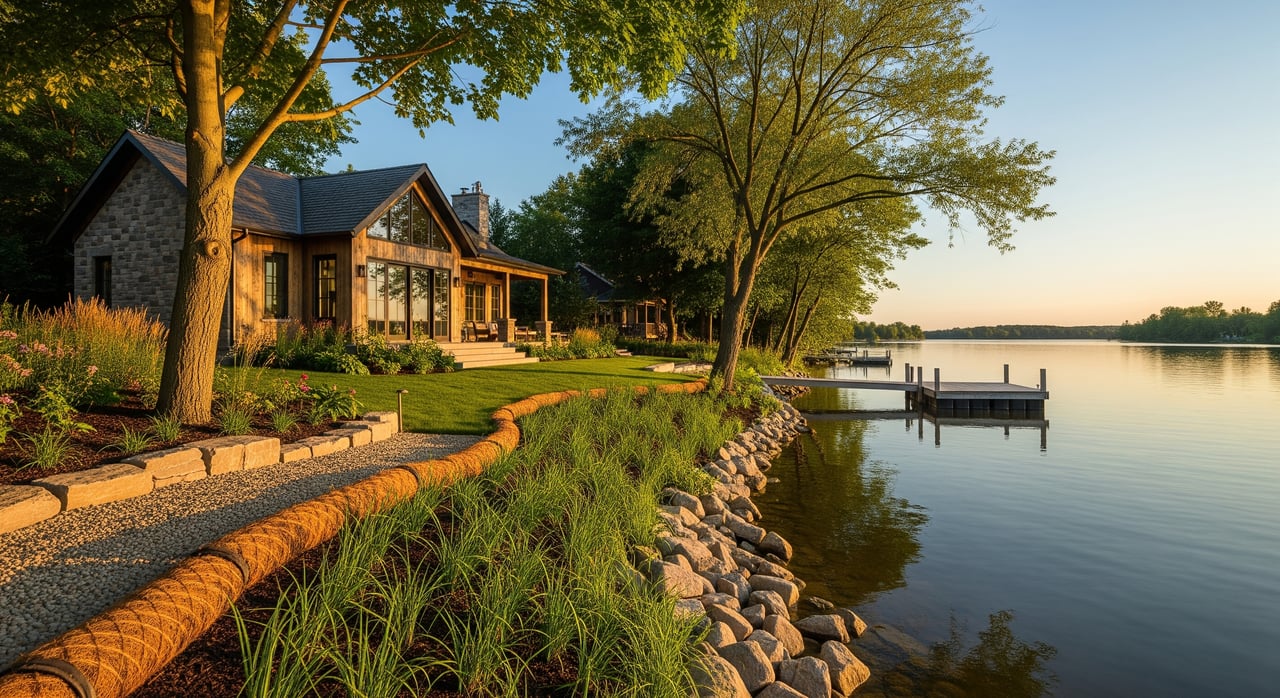
CA reviewers often prefer soft bioengineering solutions where feasible. Live staking, coir mats and native plantings can stabilize banks while improving habitat. Hard armouring can be approved where needed, provided it is engineered and stable.
Protecting and restoring native vegetation is a frequent condition, especially when removing invasive species. You may be asked for a planting plan and monitoring. During construction, plan for silt fencing, turbidity curtains and stabilized access points. Limit heavy equipment on the bank, use upland staging and protect fish habitat by meeting timing windows.
Real-world homeowner scenarios
- Replacing a small section of existing riprap often needs a permit, though review can be simpler if disturbance is limited and controls are strong.
- Installing a private or floating dock is usually regulated and may involve municipal and federal screening as well.
- Building stairs down a slope typically requires a permit if they penetrate the bank or regulated area.
- Removing a storm-fallen tree on the bank can be an emergency, but notify the CA promptly for direction to avoid habitat harm and erosion.
- Regrading sand or gravel along the shoreline usually requires review because it can affect drainage, stability and downstream sediment supply.
Avoid costly mistakes
Working without a required CA permit can lead to stop-work orders, fines and mandatory restoration. These issues can appear on title and affect future sales. Lenders and insurers may ask for proof of permits for recent shoreline work, so keep documentation and request copies from previous owners when you buy.
Quick checklist for Simcoe riverfront owners
- Consult the LPRCA maps and permit pages to see if your property and project are in a regulated area.
- Email the CA with your address, photos and a description to request screening and timing window guidance.
- Confirm municipal needs with Norfolk County for docks, grading or septic work.
- Flag federal issues if you will work in the water or affect navigation, and contact DFO or Transport Canada as needed.
- Prepare a simple plan, photos and construction methods, and engage professionals for major stabilization.
- Obtain a written permit or a written “no permit required” confirmation before starting.
Work with a local advisor
If you are planning to buy or sell along the river, timing and paperwork matter. Our team understands rural and waterfront due diligence, and we can help you plan a practical path that respects regulations while preserving value. If you are weighing repairs or upgrades before listing, we can talk through sequencing and disclosure so you move forward with confidence.
Ready to get started? Connect with Kevin, Alicia & Associates to discuss your goals and timeline.
FAQs
Do I need a permit to cut trees on a riverbank in Simcoe?
- Tree removal within a regulated area often requires a CA permit, so screen with the CA before cutting.
How do I know if my Simcoe property is in a regulated area?
- Check the LPRCA regulated area maps first and request a CA email screen if anything is unclear.
Do floating docks still need approval in Norfolk County?
- Docks, including floating docks, are commonly regulated and may also require municipal and federal screening.
How long do LPRCA permits typically take?
- Informal screens can be days to weeks, while formal permit reviews can run several weeks to a few months.
What if a previous owner did shoreline work without permits?
- Contact the CA for guidance, since orders, remediation or proof of permits can affect title, insurance and a sale.
When can I do in-water work near Simcoe?
- In-water work usually must follow local fish-free timing windows set by the CA and DFO.