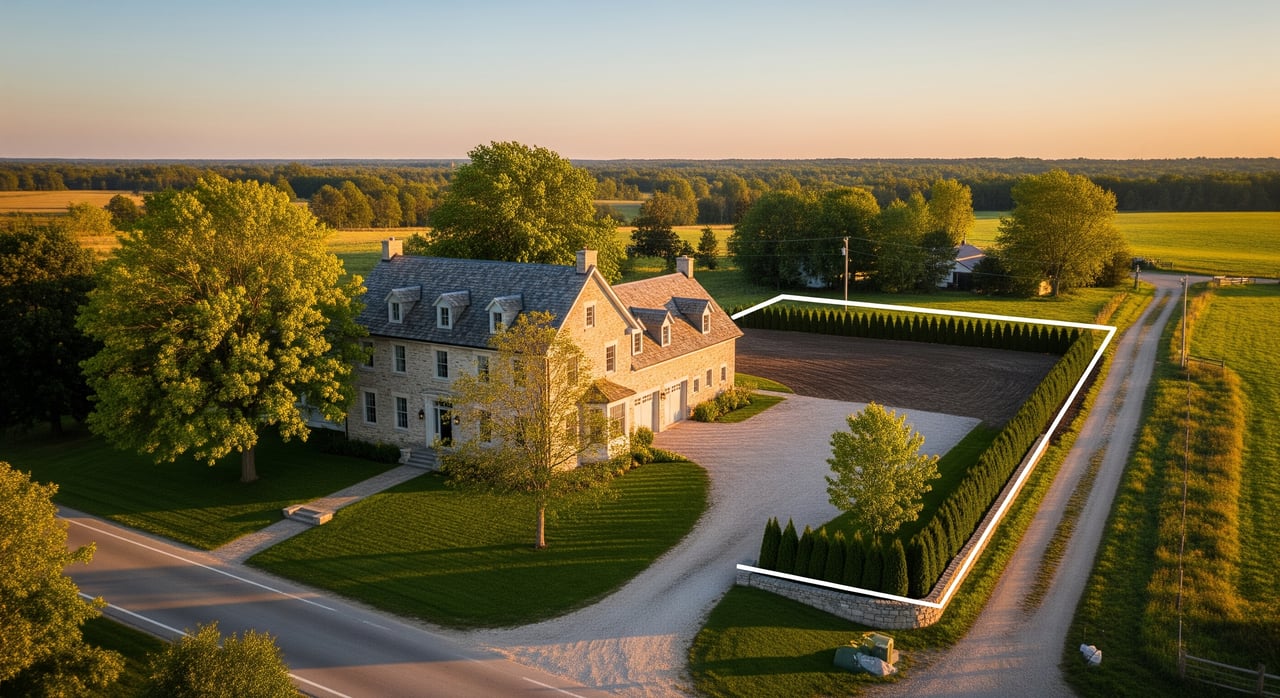
Trying to split your property or tweak a setback in St. George? If you are planning a project in the County of Brant, you will likely hear two terms a lot: land severance and minor variance. They sound similar, but they solve very different problems and follow different rules. In this guide, you will learn what each approval does, how the County reviews them, timelines, costs, and how to avoid common pitfalls in and around St. George. Let’s dive in.
What is a land severance?
A land severance, also called a consent, is the legal process to create a new lot or adjust property boundaries under Ontario’s Planning Act. You use it when you want to split a parcel, sell a portion, create an easement or right-of-way, or fix a lot line.
A successful consent results in a new parcel being registered on title. The Committee of Adjustment can approve it with conditions, and you must clear those conditions before the new lot is finalized.
Use a land severance when your goal is to change how the land is divided. It deals with boundaries, not building dimensions.
What is a minor variance?
A minor variance gives you relief from one or more numeric rules in the zoning by-law, such as setbacks, lot coverage, or minimum lot area. It does not change your property boundaries.
You use a minor variance when your proposed use fits the Official Plan and zoning category, but you cannot meet a specific measurement. It is a targeted tool to fine-tune a plan without a full rezoning.
A variance can carry conditions, such as limiting where a building can sit or requiring landscaping to reduce impacts on neighbours.
Key differences at a glance
- Purpose: Severance creates or adjusts lots. Variance adjusts measurements within existing zoning.
- Outcome: Severance changes title and results in a new parcel. Variance allows a plan that deviates from numeric standards to proceed.
- Complexity and time: Severances often take longer because they involve more agencies, conditions, and surveys. Variances are typically quicker.
- Combination: You can apply for both if a new lot will not meet certain zoning numbers.
How St. George approvals work
St. George is within the County of Brant. The County’s planning staff and Committee of Adjustment process both consents and minor variances. Applications are circulated to municipal departments and to neighbours for comment.
If part of your land is within a regulated area, the Grand River Conservation Authority may need to review your proposal. Their input is required for natural hazards such as floodplains, slopes, and watercourses. If your property fronts a provincial highway, the Ministry of Transportation may also be involved for access.
Decisions of the Committee of Adjustment can be appealed to the Ontario Land Tribunal. The appeal period is set by the Planning Act.
When to apply for both together
It is common to apply for a severance and one or more variances at the same time. For example, if you are creating a new lot behind an existing home in St. George and the new lot is slightly undersized by the zoning standard, you may file both applications together. The Committee can hear both matters in one meeting, and approvals can be tied to each other with conditions.
Step-by-step: land severance process
Pre-consultation. Speak with County planning staff early. If any part of your land is regulated, contact the Grand River Conservation Authority as well. Early conversations help identify required studies and likely conditions.
Prepare your application. Typical items include a completed consent form, a draft reference plan from an Ontario Land Surveyor, a current deed, a planning justification letter, and any required technical reports. Common studies include septic suitability or a hydrogeological report for private services, and natural hazard or environmental review if you are near regulated features.
Circulation and notice. The County circulates your file to prescribed agencies, utilities, and neighbours. Comments from roads, public works, GRCA, and utilities often shape the conditions.
Committee of Adjustment hearing. You or your representative present the proposal. The Committee decides to approve, approve with conditions, or refuse.
Clear conditions and register. If approved with conditions, you must satisfy them within the set timeline. Typical conditions include registering the survey, securing entrance approvals, confirming servicing, paying fees, and securing any needed easements or road widenings. Once cleared, the consent is finalized and the new deed can be registered.
Timelines: Expect several months from submission to decision, commonly 3 to 6 months depending on circulation and meeting schedules. Clearing conditions can add time.
Step-by-step: minor variance process
Pre-consultation. Confirm that a variance, not a rezoning, is the right path. Planning staff can advise on the appropriate tool and the level of justification required.
Submit your application. Include a site plan with measurements, elevations if relevant, photos for context, and a brief planning justification explaining how your variance meets the tests.
Circulation and notice. The County circulates your application to departments and neighbours and provides public notice of the hearing.
Committee of Adjustment hearing and decision. The Committee can approve with conditions or refuse. Conditions may limit the location of the structure or require screening.
Timelines: Many variance files conclude within 1 to 3 months, depending on complexity and Committee schedules.
Decision tests you must meet
For severances, the Committee looks at conformity with the County of Brant Official Plan, compatibility with surrounding uses, zoning compliance or the need for variances, lot size and shape, access and safety, servicing by municipal systems or private septic and well, and any natural hazards. Provincial policies and conservation authority regulations are also considered.
For minor variances, the Committee applies four tests:
- Does it maintain the general intent and purpose of the Official Plan?
- Does it maintain the general intent and purpose of the Zoning By-law?
- Is it desirable for the appropriate development or use of the land?
- Is it minor in nature, meaning limited in scope and impact?
Common issues in St. George and Brant
- Regulated features. Properties near floodplains, slopes, or watercourses may require GRCA review, added studies, or permits. Some proposals can be denied for safety reasons.
- Prime agricultural areas. New residential lots in prime agricultural areas face strict limits. Only narrow circumstances allow severances, and agricultural policies are often a key hurdle.
- Private servicing. Where municipal water and sewer are not available, you will need septic and well assessments. Inadequate septic capacity is a common reason for conditions or refusal.
- Access to provincial roads. If near a provincial highway or controlled corridor, expect added review for entrances and safety.
Costs, timelines, and who to hire
Costs vary with complexity, but common categories include County application fees, survey costs for a reference plan, planning consulting fees, septic or hydrogeological studies, engineering for entrances or grading, conservation authority permit fees if required, and legal fees for title and registration. Appeals add legal, planning, and filing costs.
Timelines depend on meeting cycles and the need for studies. Variances are usually faster than consents. Appeals to the Ontario Land Tribunal can add months.
Professionals you may retain include a planning consultant, an Ontario Land Surveyor, a septic designer or hydrogeologist, a civil engineer, and a lawyer for registration and conveyancing.
Buyer and seller tips
- Do early due diligence. Before you commit, confirm zoning, lot lines, and whether your land is in a regulated area. Ask County planning staff about any past consents or variances nearby.
- Selling part of a property. Pre-consult, get survey pricing estimates, and confirm whether the proposed lot can meet zoning standards. Consider making any agreement conditional on consent approval.
- Buying a recently severed lot. Verify that all consent conditions were fulfilled and that the reference plan is registered. Ask for a current status letter.
- Not sure if you need a variance or rezoning. Minor variances are for limited numeric relief. Larger or policy-based changes likely need rezoning.
Next steps
If you are weighing a severance or a variance in St. George, start with a conversation with County planning staff and, if applicable, the Grand River Conservation Authority. Clarify timelines, required studies, and the tests your proposal must meet. When you are ready to plan a strategy, you can connect with a local advisor who understands rural, agricultural, and development files in Brant.
If you want tailored guidance on your property, reach out to Alicia Haight for a confidential consultation.
FAQs
In St. George, what is the difference between a land severance and a minor variance?
- A severance creates a new lot or adjusts property boundaries, while a minor variance provides relief from numeric zoning standards without changing boundaries.
How long does a minor variance usually take in the County of Brant?
- Many variance applications are decided within 1 to 3 months, depending on the complexity of the request and Committee schedules.
Do I need Grand River Conservation Authority review for my St. George property?
- You may if your land is in or near regulated features like floodplains, slopes, or watercourses, and GRCA input or permits can affect timing and conditions.
Can I create a new residential lot on farmland in Brant County?
- Severances in prime agricultural areas are tightly restricted, and new residential lots are often not permitted except in limited circumstances under policy.
Who makes the decision on consents and variances in St. George, and can I appeal?
- The County of Brant’s Committee of Adjustment makes the decision, and parties can appeal to the Ontario Land Tribunal within the statutory appeal period.
What documents are typically required for a land severance application in St. George?
- Expect a completed application, a draft reference plan by an Ontario Land Surveyor, title documents, a planning justification letter, and any needed technical reports such as septic or hydrogeological studies.