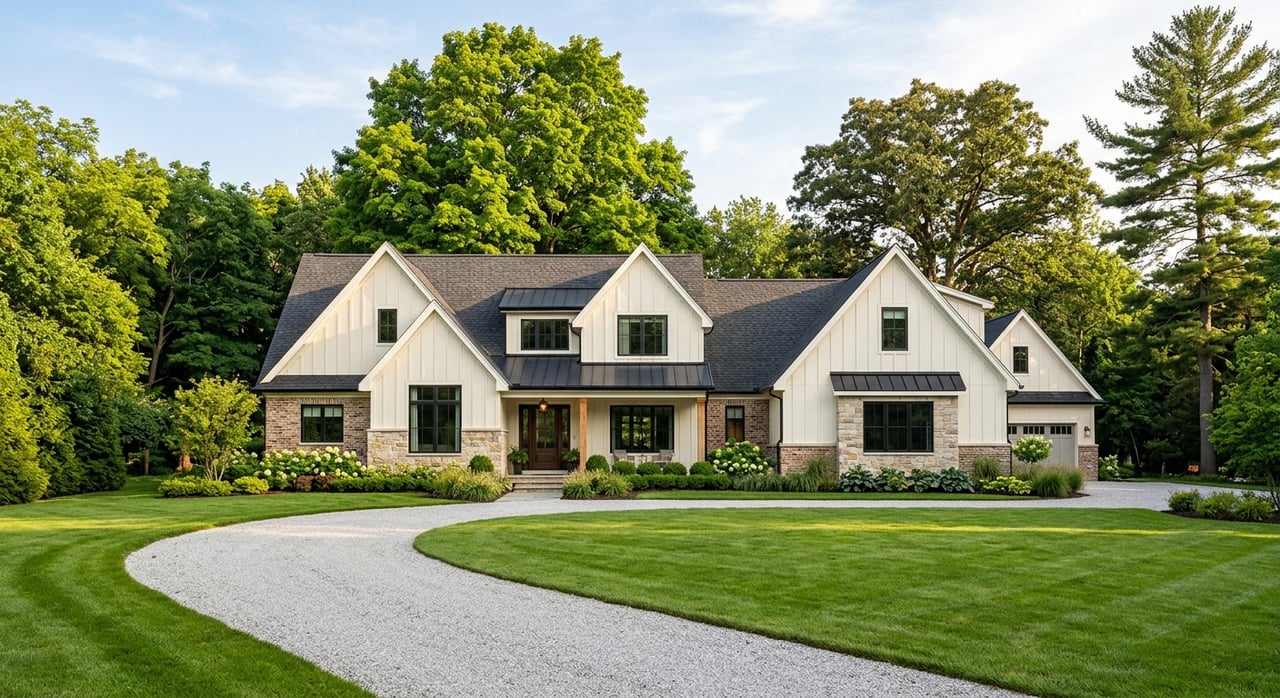
Thinking about building a custom home on acreage near St. George? It can be an exciting move, but it also comes with more planning work than many buyers expect. The right parcel can support your vision beautifully, while the wrong one can bring delays, added costs, or limits on what you can build. This guide walks you through the local planning and due diligence issues that matter most so you can move forward with more clarity and confidence. Let’s dive in.
Why location details matter near St. George
Not all land near St. George follows the same planning path. St. George is one of the County of Brant’s Primary Settlement Areas, where the County expects most residential and employment growth to be directed through 2051, and where municipal water and wastewater servicing exists or is planned.
That said, a property “near St. George” may still fall inside the settlement area, in a rural residential setting, or within agricultural countryside. That distinction matters because zoning, servicing, lot creation rules, and approval timelines can change significantly from one parcel to the next.
If a parcel is within an agricultural designation, the County’s planning framework generally directs non-agricultural lot creation away from agricultural lands and toward settlement areas. Some limited residential lot creation may still be considered on rural lands, but the review process and policy context can be very different.
Start with land-use permissions
Before you focus on house plans, start with what the land is actually allowed to become. You will want to confirm the official plan designation, the current zoning, and whether the parcel already exists as a legal lot or still needs a consent or severance.
The County’s planning framework includes categories such as Rural Residential and Hamlets/Villages, and each category can shape what is possible on the site. If the lot needs to be created from a larger parcel, a consent application is required before the severance can happen.
In some cases, the proposal may largely fit the zoning by-law but miss one specific standard. When that happens, a minor variance may be part of the path forward.
A simple early check can save you a great deal of time and money later. For purchase-and-sale due diligence, the County offers a Building and Planning Compliance Certificate, which can help clarify important planning details before you commit.
Understand servicing before you buy
Servicing is one of the biggest differences between settlement-area lots and rural acreage. In and around St. George, some properties may have access to municipal services, while others may rely on private systems such as a well and on-site sewage system.
That difference affects both cost and complexity. If municipal water and sewer are not available, Ontario guidance notes that a rural home may depend on a well and septic system, and electrical connection costs can increase if the lot sits far from existing service.
The County is also actively managing infrastructure capacity in St. George. Its current servicing update notes that wastewater capacity is limited and that a capacity allocation policy is being used while upgrades are underway.
For a buyer, this means you should not assume that being close to St. George automatically means easy municipal servicing. A parcel’s servicing situation should be verified early, along with any timing issues tied to capacity.
Check wells, septic, and water quality
If you are buying acreage with private servicing, the well and septic system deserve careful review. The County reminds well owners that they are responsible for water safety and encourages regular well water testing.
That makes water quality and well condition an important part of your due diligence, not something to revisit after closing. If the property already has a septic system, the County offers septic records searches for buyers and sellers, which can help you understand the system’s history.
If the lot is not sewered and you plan to build, a sewage-system permit will be required so the installation meets Ontario Building Code minimums. This is a core step in the process, and it should be considered alongside house design, grading, and site layout.
Confirm road access and entrance requirements
A beautiful parcel still needs practical, compliant access. In Brant County, a permit is required to construct, alter, or repave an entrance on the municipal road allowance, and entrances must be built to Ontario Provincial Standards.
If your future build requires driveway work, a new entrance, or changes within the road allowance, that should be identified before you finalize your purchase. Access improvements can affect both timing and cost.
This is especially important on larger parcels where the ideal house site may sit well back from the road. Long driveways, utility runs, and entrance work can all influence your budget and site plan.
Review grading, fill, and site alteration rules
Not every site is ready for construction the day you buy it. If the property needs fill, topsoil removal, or grading changes, County site-alteration rules may apply.
For larger or more disruptive work, the County may require an engineer’s site drawing, soil information, environmental studies, and in some cases a Stage 1 archaeological assessment. These are not small details, because they can shape both timelines and pre-construction costs.
The County also requires lot grading review to be approved before you apply for a building permit. For a new house, lot grading certification is needed so drainage directs water away from the building and toward proper systems.
Look for environmental constraints early
Environmental constraints are another area where acreage buyers can get surprised. If the parcel is near a river, stream valley, wetland, steep slope, or shoreline regulated by the Grand River Conservation Authority, additional review may be needed.
The GRCA’s property mapping tool can help identify whether a site falls within a regulated area. If it does, a GRCA permit may be required in addition to municipal approvals.
This is worth checking at the start of your search, not after you have already designed the home. Conservation-related constraints can affect siting, grading, access, and the amount of usable land for your plans.
Follow the typical approval sequence
One of the smartest ways to approach a custom acreage project is to work in the same order the approvals process expects. In Brant County, pre-consultation is encouraged because it helps identify process, timelines, fees, and the materials needed for a complete application.
From there, land-use approvals usually come first. Depending on the property, that may involve a consent or severance, a minor variance, or another planning application before a building permit can move ahead.
Once the planning path is clear, the next step is to finalize servicing and the site plan. For a new house, the County’s building permit package requires a house siting and grading plan prepared by a qualified professional, and for homes outside settlement areas it also requires an MDS I calculation.
After that, you can assemble the building permit package. The County says a new residential permit application needs a property deed, an applicable-law checklist, designer information, and scaled drawings.
If work will occur in the municipal road allowance, or if the home will connect to municipal water or sanitary sewer, a public works permit must be in place before the building permit is issued. This is one more reason to coordinate planning, servicing, and access from the start.
Budget for charges and soft costs
When buyers picture a custom home on acreage, they often focus on land price and construction cost. In reality, approvals, studies, permits, servicing work, and development charges can all play a meaningful role in the total budget.
Brant’s current development charge by-law applies county-wide, and water, wastewater, and stormwater charges apply only when development receives those services. The current by-law period runs from November 1, 2024 to October 31, 2034.
You may also need to budget for planning applications, septic approvals, grading plans, entrance permits, and any required outside-agency review. Having a realistic soft-cost budget at the beginning can help you choose the right parcel and avoid overcommitting to one that looks simpler than it really is.
Plan for long-term usability and resale
Acreage living is personal, but it also pays to think ahead. A practical planning-based takeaway from the County’s rules is that properties tend to be easier for future owners to use when they have clear zoning, dependable servicing, straightforward access, good drainage, and complete documentation.
That does not guarantee resale results, but it does point to what often makes a property easier to own and easier to understand. If future changes are limited by rural approvals, private servicing, or conservation constraints, flexibility in the original design matters even more.
Floor plans that can adapt to changing needs, practical outbuilding planning, and organized records for permits, septic information, grading, and approvals can all support long-term value. Those details may also matter later if you refinance, add on, or decide to sell.
Why local guidance matters on acreage
Buying or planning acreage near St. George is rarely just about finding enough land. It is about finding the right land, with the right planning framework, the right servicing path, and the right approvals strategy.
That is where local, detail-oriented guidance can make a real difference. When you understand the parcel before you buy it, you put yourself in a much stronger position to build with confidence and protect your investment.
If you are exploring land or custom-home opportunities near St. George, Alicia Haight can help you evaluate the planning, servicing, and property-positioning details that matter most.
FAQs
What should you check before buying acreage near St. George for a custom home?
- You should confirm the official plan designation, zoning, servicing, road access, environmental constraints, and whether the parcel needs a consent, severance, or variance.
Does land near St. George always have municipal water and sewer?
- No. Some parcels may be within the settlement area with municipal services available or planned, while others may rely on private wells and on-site sewage systems.
Can you build a custom home on agricultural land near St. George?
- Possibly, but agricultural designation can change the approval path because the County generally directs non-agricultural lot creation away from agricultural lands and toward settlement areas.
What permits are often needed for a new custom home on acreage in Brant County?
- Depending on the property, you may need planning approvals, a building permit, septic approval, lot grading approval, an entrance permit, a public works permit, and possibly a GRCA permit.
Why is well and septic due diligence important on rural land near St. George?
- Private servicing affects both cost and long-term ownership, and the County notes that well owners are responsible for water safety while septic systems require proper permitting and records review.
How does wastewater capacity affect building near St. George?
- The County has said wastewater capacity in St. George is limited and is currently being managed through a capacity allocation policy while upgrades are underway.