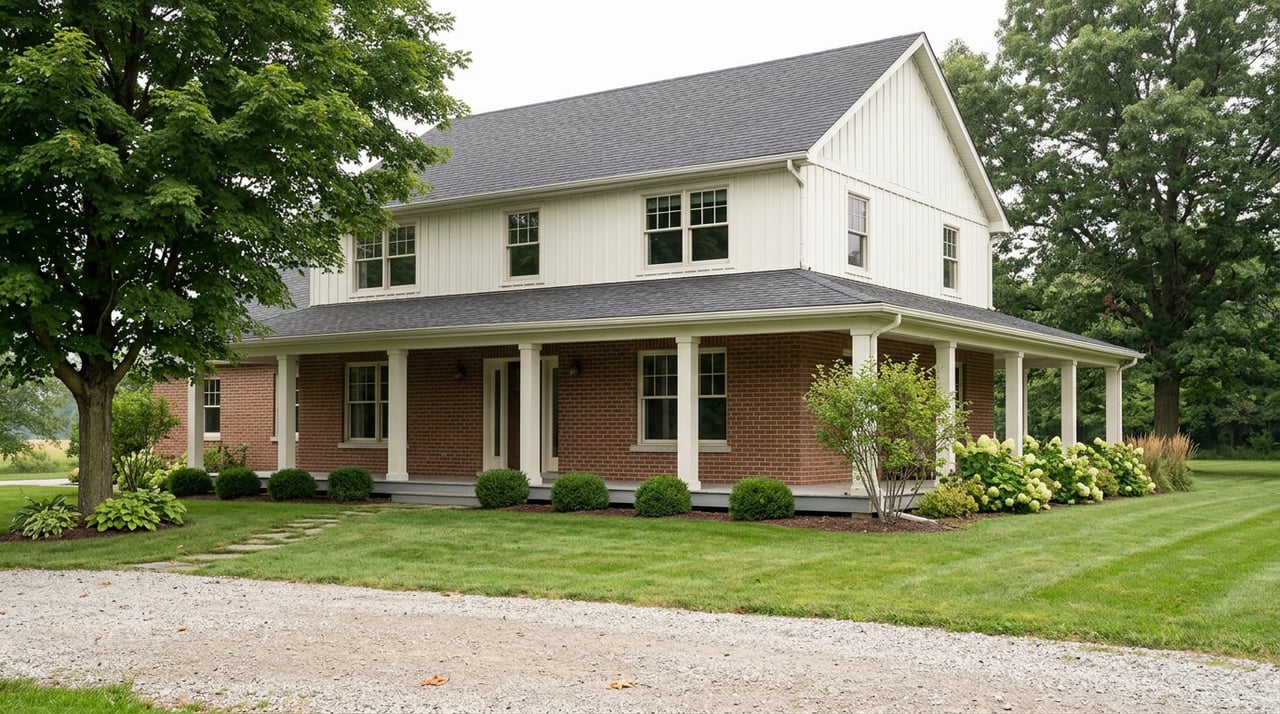
Two buyers each put in an accepted offer on a Kitchener home in the same week this past spring. Both homes were priced within a few thousand dollars of each other. Both closings were set for 30 days out. One buyer had a bound insurance policy within 48 hours of applying. The other got a letter from their broker saying coverage was conditional on an electrical inspection, with a document due back before the insurer would confirm anything in writing.
The difference had nothing to do with the offer price, the condition of the kitchen, or how the sellers negotiated. It came down to which decade the house was framed in. One home sat in a neighbourhood built after 1980. The other sat in a pocket of the city where most homes went up between 1965 and 1975. Buyers comparing Kitchener neighbourhoods almost always run the comparison on price per square foot, lot size, and walkability. Insurers run a different comparison entirely, and it decides whether your closing date holds.
Three Decades, Three Neighbourhoods
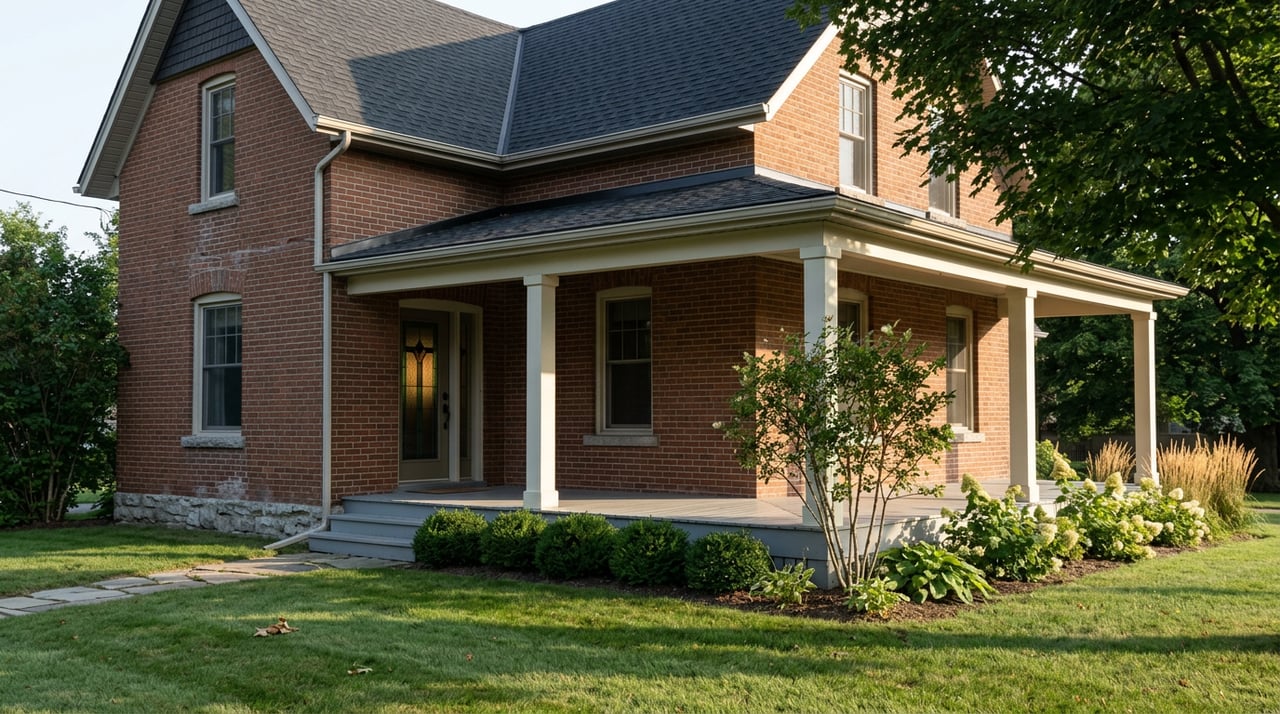
Kitchener's residential map reads like a set of construction eras stacked next to each other rather than blended together. Victoria Park is the clearest case: it's Kitchener's first Heritage Conservation District, built around the city's most recognizable green space, with a mix of single-family heritage homes, semi-detached units, and newer condo towers layered into the same streets. Cherry Hill sits immediately north of Victoria Park and carries an even tighter concentration of character homes, many over a century old, on wide tree-lined streets. A short distance away, Mount Hope-Breithaupt holds heritage homes dating to the early twentieth century along streets like Breithaupt Street, Duke Street W, Margaret Avenue, and Lancaster Street W, many still showing their original wrap-around porches and stained-glass windows.
Move a few kilometers out and the construction era shifts by decades, not years. The Kitchener side of Westmount, anchored by the Westmount Golf & Country Club, is largely bungalows built from the late 1950s onward. Southdale, sitting between the expressway and Fairway Road, is mostly 1960s and 70s housing stock. Laurentian Hills, tucked against McLennan Park in south-central Kitchener, runs from the early 1970s through the late 1980s.
Buyers touring these neighbourhoods back to back tend to describe the difference in aesthetic terms: character versus convenience, mature trees versus attached garages. That framing misses the part of the house nobody tours, the wiring behind the walls, which follows the construction date almost exactly and determines something the listing photos never will.
What's Behind the Wall Matters More Than What's Behind the Porch
Homes built before roughly 1930, the era that produced most of Cherry Hill and the Victorian-era streets of Victoria Park and Mount Hope-Breithaupt, were commonly wired with knob-and-tube, an ungrounded system run through ceramic insulators. It isn't inherently dangerous on its own, but many Ontario insurers will not write or renew a policy on a home with active knob-and-tube unless a licensed electrician has assessed the system and confirmed it's safe.
Homes built between the mid-1960s and mid-1970s, the era that shaped much of Westmount and the earlier sections of Southdale, were commonly wired with aluminum branch circuits, a choice builders made when copper prices spiked. Aluminum wiring is still legal under the Ontario Electrical Safety Code today, but it expands and contracts differently than copper, which can loosen connections at outlets and switches over time. Insurers know this, and many require an inspection and a Certificate of Acceptance from the Electrical Safety Authority before they'll bind coverage.
Homes built from the mid-1970s onward, which describes most of Laurentian Hills and the newer end of Southdale, typically have standard copper wiring that clears underwriting without a second look.
Here's how that lines up across the neighbourhoods, based on their typical construction windows:
| Neighbourhood | Typical construction era | Likely wiring generation | Insurer posture |
|---|---|---|---|
| Cherry Hill | Pre-1920s | Knob-and-tube | Often requires electrician sign-off before binding |
| Victoria Park | Victorian era, late 1800s to early 1900s | Knob-and-tube, mixed with later rewiring | Case-by-case, often requires inspection |
| Mount Hope-Breithaupt | Early 1900s | Knob-and-tube | Often requires electrician sign-off before binding |
| Westmount (Kitchener side) | Late 1950s onward | Aluminum branch circuits (1960s-70s builds) | Frequently requires ESA Certificate of Acceptance |
| Southdale | 1960s-70s | Aluminum branch circuits | Frequently requires ESA Certificate of Acceptance |
| Laurentian Hills | Early 1970s to late 1980s | Mostly copper | Typically binds without additional inspection |
This isn't a reason to avoid any of these neighbourhoods. It's a reason to ask a different question during your search than most buyers think to ask.
The Letter That Shows Up After the Offer
The friction rarely surfaces during the tour or even the inspection. It surfaces after the offer is accepted, when the buyer applies for insurance and the broker comes back with conditions instead of a quote. Some Ontario insurers send a letter putting the policy at risk unless the homeowner provides an ESA certificate within 30 days, a deadline that lands squarely inside a typical closing window.
Getting that certificate isn't complicated in itself. A licensed electrical contractor assesses the panel and the terminations, makes any needed repairs, such as pigtailing aluminum conductors to copper-rated connectors, and files for an ESA inspection. Once the work passes, the homeowner receives a Certificate of Acceptance to forward to the insurer. The process works. The problem is timing. A buyer who assumed insurance would be a formality can find themselves scheduling an electrician, waiting for an appointment, and hoping the paperwork clears before their lawyer needs to release funds.
Knob-and-tube tends to be a harder stop than aluminum. Where aluminum wiring usually just needs an inspection and targeted repairs, some insurers decline coverage on active knob-and-tube outright until it's been fully assessed by a qualified electrician, and in some cases replaced. That's a meaningfully different conversation to have with your lender's timeline than a routine ESA sign-off.
Reframing the Comparison
The real gap between a Cherry Hill century home and a Laurentian Hills bungalow isn't character versus practicality. It's certainty versus timeline. A buyer who wants the porch, the mature trees, and the walk to Victoria Park is choosing a home where the insurance step needs to start the day the offer is accepted, not the week before closing. A buyer drawn to Southdale's value or Westmount's proximity to the golf course needs to budget time for an aluminum wiring assessment even if the house shows no visible problems. A buyer in Laurentian Hills is far more likely to sail through underwriting without a second document requested.
None of this should decide which neighbourhood is right for a buyer. It should decide how early in the process they start asking about wiring, and who they ask.
What Fixing It Actually Involves
For aluminum wiring, the fix is usually targeted rather than a full rewire. A licensed electrical contractor opens the outlets, switches, and panel connections, replaces devices with ones rated for aluminum or pigtails in a short length of copper at each connection point, and has an ESA inspector confirm the work. The homeowner keeps the Certificate of Acceptance on file, both for the current insurer and for the next buyer's underwriting process down the line.
For knob-and-tube, the scope depends on how much of the system is still active and how it's been modified over the decades. A licensed electrician can assess which circuits are live, whether any have been extended improperly, and whether insulation has been packed around wiring that was designed to dissipate heat in open air. Full replacement takes longer and costs more than an aluminum remediation, and it's worth pricing out before writing an offer rather than after.
For any buyer looking at a pre-1975 Kitchener home, asking the seller's agent whether an ESA Certificate of Acceptance already exists is a fair, specific question, and one that can save weeks.
Frequently Asked Questions
Does a home with aluminum or knob-and-tube wiring fail a home inspection? A standard home inspection will note the presence of aluminum or knob-and-tube wiring, but a general home inspector typically isn't qualified to certify the electrical system. That certification comes from a licensed electrical contractor, separately from the inspection.
Can I still get a mortgage on a home with knob-and-tube wiring? Lenders generally follow the insurer's lead. If the insurer won't bind coverage without an electrical certificate, the lender won't fund without proof of insurance, which makes the ESA sign-off a practical requirement rather than a suggestion.
Is aluminum wiring actually dangerous? The Electrical Safety Authority confirms aluminum wiring is permitted and safe under the Ontario Electrical Safety Code when properly installed, terminated, and maintained. The risk shows up over decades as connections loosen, which is why insurers ask for verification rather than assuming a 50-year-old installation still meets today's standard.
Does this affect resale value? A documented ESA certificate on file tends to smooth the next sale rather than the current one. Sellers who complete the remediation and keep the paperwork hand the next buyer's insurer exactly what they need, which can shorten that buyer's closing timeline in turn.
If you're comparing a century home in Cherry Hill or Mount Hope-Breithaupt against a bungalow in Southdale or Westmount, the wiring question deserves the same early attention as financing and inspection. Kevin, Alicia & Associates has walked Kitchener buyers through exactly this kind of decade-by-decade comparison before an offer goes in, not after. Book a property valuation and we'll talk through what a specific address's era actually means for your closing timeline.